 I haven't been recording much rock lately, but I'd like to share with you some recording that were left off of previous albums for various reasons. This isn't to suggest that the songs here are scraps. I'm actually quite happy with many of these tracks; they simply didn't fit on the previous albums. In fact, "Endless Sky" and "Running Into the Ground" are among the few Glaze of Cathexis songs that I've had the opportunity to play live. Many of these have a little more of a synth-pop/new wave vibe than the other albums do. "Mystery to Me" is still one of my favorite tracks with its blend of Talking Heads, Echo and the Bunnymen, and Television. The first two tracks seem to have unconsciously tapped into the early Cure sound. I could never really decide if instrumentals like "Cloud Machine" and "Voodoo Doctor" were destined to be Damaged Tape or Glaze of Cathexis tracks (until now of course). "Every Day" was supposed to be the closing track on Tokyo Rainbow Bridge, but I didn't notice the omission until the thing had already been released. "Something to Bend" was left off of The Holographic Universe because I felt like it had a similar vibe to "Frigid Season." I find "Never in Synch" and "Out of Step" slightly embarrassing for some reason, but not enough to keep them under wraps. I'd love to hear your comments about these tracks as I'm finally getting around to recording new Glaze of Cathexis material (check out Dr. Schluss' Best of 2008 for a little preview).
01 January 2009
Glaze Of Cathexis - 2009 - Cloud Machine
I haven't been recording much rock lately, but I'd like to share with you some recording that were left off of previous albums for various reasons. This isn't to suggest that the songs here are scraps. I'm actually quite happy with many of these tracks; they simply didn't fit on the previous albums. In fact, "Endless Sky" and "Running Into the Ground" are among the few Glaze of Cathexis songs that I've had the opportunity to play live. Many of these have a little more of a synth-pop/new wave vibe than the other albums do. "Mystery to Me" is still one of my favorite tracks with its blend of Talking Heads, Echo and the Bunnymen, and Television. The first two tracks seem to have unconsciously tapped into the early Cure sound. I could never really decide if instrumentals like "Cloud Machine" and "Voodoo Doctor" were destined to be Damaged Tape or Glaze of Cathexis tracks (until now of course). "Every Day" was supposed to be the closing track on Tokyo Rainbow Bridge, but I didn't notice the omission until the thing had already been released. "Something to Bend" was left off of The Holographic Universe because I felt like it had a similar vibe to "Frigid Season." I find "Never in Synch" and "Out of Step" slightly embarrassing for some reason, but not enough to keep them under wraps. I'd love to hear your comments about these tracks as I'm finally getting around to recording new Glaze of Cathexis material (check out Dr. Schluss' Best of 2008 for a little preview).

30 December 2008
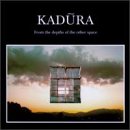
Kadura - 1997 - From the Depths of the Other Space
 Quality: 4.5 out of 5
Trip-O-Meter: 4.5 out of 5
Here's a Japanese band that treads similar folky/spaced out sound to their countrymen in Ghost. I'd go as far to say that I actually prefer these guys at the end of the day. Although I wouldn't say their vocals are the best, they do fit in that 'monk-screaming-at-the-temple' sort of vibe, and the music has no problem working that angle. These guys are pretty loud, but they pretty much avoid the 'metal' tag entirely and instead dabble in a very loud psychedelic Japanese folk style.
"Beginning to Eternity" is a very darkly hued invocation to the strange ceremony that these folks are about to commence with. "Travel to Faraway" does just that with its 12 minute running time, the massive sounding percussion mingling with the warbling vocals. Kadura has no issue sticking with a psychedelicized Japanese folk groove. "Oceanic Element" gives us a sea of shimmering guitars, and move is like a short tour of hell. I keep equating these tunes with dark imagery, but I think there is a high enjoyability factor present in this music. "Inner Trance" blasts you back above the surface, only to float with the storm clouds of "Sky Heart." The closing "A Distant Land" brings in a bit more of the noise, recalling the sludgy freak-outs of Acid Mothers Temple (although I wouldn't say Kadura is quite as extreme).
This album is like a journey through the bleaker corners of Japanese folklore. That is to say that while it definitely evokes a dim palette, there's more than enough character and groove in these songs to keep you from getting depressed or anything. It's like a mystical event occurring right at the edge of your peripheral vision.
29 December 2008
Brainticket - 1972 - Psychonaut
 Quality: 4 out of 5
Trip-O-Meter: 4 out of 5
I guess that for all intents and purposes, this is Brainticket's pop album. It's lacking the extreme freak outs that color Cottonwood Hill, and while it pushes against the envelope, it doesn't gleefully plow through as the band tends to do on other releases. What we do get here are top notch, assured performances, and by far the band's best songwriting. This is pretty awesome, 70's-style psych rock. It's not a bad introduction to the band; sometimes it's nice to become somewhat comfortable with musicians before they completely blow your mind.
The first couple tracks are very liquid and chill. I especially dig the chiming piano line and delayed percussion that grace "One Morning." Things pick up noticeably for the balls out "Watchin' You." Dawn Muir's vocals cut through the thick brew, piercing with absolute conviction. It doesn't hurt to have a nice face-melting guitar solo thrown in the middle too. "Like a Place in the Sun" is a jazzy display of the band instrumental prowess while Muir is at her wackiest for this particular album. "Coco Mary" is a very pounding, driving track with a cool marimba break catching the listener off guard.
This is probably the most consistently listenable Brainticket release. The catch is that you're not hearing their 8th ring of Saturn, cosmically deranged sounds, but you do get some fine songs and
a band playing with almost telepathic communication. I suppose that in Can terms, this would be their Ege Bamyasi, and I don't feel that's a bad thing at all.
Entheogens - 1995 - The Gnostic Mass
 Quality: 4.25 out of 5
Trip-O-Meter: 4.75 out of 5
I'd say that the band's name is a pretty dead give away that we're going to find a pretty psychedelic slab of music on this release. Now, information about the Entheogens is not the easiest to come by, but from what I can gather this is a Swedish collective, with this album being a series of jams. I envision that they are spending the winter in a Swedish cabin, buried in snow, but with an enviable collection of acoustic instruments and a seasonal supply of magic mushrooms at hand. It's worth noting that I didn't realize that this album is an almost a completely acoustic affair until several listens in. These folks create a very tranced-out and dynamic vibe that we typically expect with more electronically manipulated music (although I guess the Indians often hit that mark acoustically). I think there's only electric guitar deep in the mix and we occasionally get an organ blast.
"The Dance of the Priestess" a slowly building dervish melody. It's a little of a drum circle vibe, but as done by experts rather than stoned weirdos in the park. "Fire at Will" is the shortest and most conventional thing here; the sound is much more smoothed out and slick, reaching towards more of a new age vibe. Fortunately, they don't get all the way to new age land, and once again show their skills at achieving a satisfying, extended, musical buildup. The 22 minute long best is saved for last. "10 Pan" is one of those transportative tracks that open up doors in your mind with it's evocative and image-inducing sounds. We get several build-ups, walls of percussion, and a couple blasts of acid-seared wah guitar.
This album seems to have fallen deep between the cracks, but is fully deserving of your attention. It really does seem to make your listening space become the stage for some sort of psychedelic, pagan ritual. The cover is enticing enough; won't you step inside?
Limbus 3 - 1969 -Cosmic Music Experience
 Quality: 2 out of 5
Trip-O-Meter: 4.25 out of 5 (but it's a bad trip)
When you get right down to it, krautrock had a pretty steep learning curve. The first efforts from folks like Tangerine Dream and Kraftwerk (as Organization) were pretty awful, and even Can showed some serious improvement over their first few records. I'd happily admit that Amon Duul is an exception to this rule as their first release is classic, but not these guys. Track down the Limbus 4 album (on this site if you wish) for an enjoyable cosmic music experience. This release, however, is more of the plinking and plunking trial and error and questionable experimentation that the krautrockers had to get out of their systems. I'd say that this is probably a little better than the truly cacophonous Electronic Meditation by Tangerine Dream, but it's really comparing rotten apples with moldy cheese.
Anyway, "Oneway Trip" is one I'd like to stay home for with the track's free jazz bass mingling with horrific and annoying bowed sounds. "New Atlantis" is more of the same, but more manic... for 22 minutes. Sandwiched in between are a couple of short tracks I find more enjoyable. "Valiha" recalls some ancient market place with mysterious dulcimer-like tones and simple percussion. "Breughel's Hochzeitstanz" is back to the screeching strings, but at least it's only two minutes long. So I guess it's not so much that I like it as that it goes away quickly. This means that I only really enjoy about three minutes of this album.
No, I'm not really giving this any sort of recommendation. The reasons that I'd imagine you'd listen to this is that you're a krautrock historian or completist, or you're simply mentally cracking. I think I fit in the former category.... hopefully.
20 December 2008
The Taj Mahal Travellers - 1974 - August 1974
 Quality: 4 out of 5
Trip-O-Meter: 5 out of 5
This music is pretty far out there, and seems to me to be the Japanese equivalent of the most deranged kraut rock. Using a variety of acoustics and a barrage of electronic instruments, the Taj Mahal Travellers attempted to reach as far into the sonic frontier as they could on an album side. Live, I can easily imagine that they'd continue until they simply passed out.
I have a pretty high appreciation for this album, but as the "4" rating above suggests, something doesn't completely click for me here. When we consider music this ambient and/or avant garde, it's often hard to put a finger on it, but I think it has something to do with their use of jarring noises in the middle of otherwise relaxing passages. I'd prefer to float into the ether. Another very subjective criticism would be their occasional tendency to throw in everything including the kitchen sink. That said, the first track probably ranks as the most etherial one with panning. buzzing electronic noises on top of a sea of ringing bells, marimbas, and electronic tones. Eventually some spaced-out wordless vocals enter the mix too. The second tracks produces a wall of shimming, amorphous sound (complete with kotos deep in the mix) before thinning out into a 'monks of doom' sounding choral section. "III" plunges into really avant garde sounds ala Can's "Peking O," while the final track makes me think of a prototype, way more experimental version of something Kitaro would have done when he was making music that didn't suck.
There is a lot of avant garde variation at work on this album, and it definitely one of the more psychedelic bits of music to crop up from Japan. Use it as aural room decor and see if it fits or not. It costs about the same as room decor with the current Amazon price tag of $359 for the 2001 vinyl reissue.
Maurice McIntyre - 1969 - Humility
 Quality: 3.75 out of 5
Trip-O-Meter: 4.5 out of 5
I keep getting the wrong name for this album, calling it Insanity instead. I'd wager that this is a legitimate Freudian slip as Maurice McIntyre's attempt to fuse Coltrane/Sun Ra-like free jazz with somewhat American Indian sounding chanting is often pretty insane sounding. It probably doesn't help that McIntyre often sounds more like a crazy dude on a street corner than a shaman, but it does make for a pretty entertaining listen.
There's not a whole lot of sonic variation on this album. We typically get a very Sun Ra like backing with Coltrane style leads (and Sun Ra cohort John Gilmore would also be a clear antecedent), sprinkled with the aforementioned chanting. The good news is that if you dig the first track, chances are you'll like the entire album, and if you don't, you can feel safe flinging it out your nearest window. Sure, there are some compositional differences. "Pluto Calling" could fit directly on a mid-60's Sun Ra album, while "Humility in the Light of the Creator" provides a lyrical, "Love Supreme," sort of saxophone line. Then for all out free-jazz freakiness, I refer you to "Life Force" and the extended "Ensemble Fate."
McIntyre's Humility feels more like a tributary than a mainline expression of avant-garde jazz. If you're already into that sort of thing, you'll likely find something interesting here. If nothing else, the oddball chanting must be heard to be believed.
09 December 2008
William Basinski - 2001 - The Disintegration Loops I-IV
 Quality: 5 out of 5
Trip-O-Meter: 5 out of 5
This collection of sounds really rates more as an experience than music. The concept at work here came about purely by accident. Basinski intended to simply convert some loops from tape to digital. Unfortunately (at first), his tape machine was slowly destroying the tapes. In a stroke of inspiration, Basinski simply let the tapes run on to their end, and that's exactly what we hear on this album. No music is really being legitimately played, and we hear only the sounds of slow decay. As a strange coincidence, Basinski converted and thereby intentionally destroyed some of these tapes with the smoke of 9/11 billowing over his NYC apartment (I think I saw a very well done 9/11 documentary that used this and ambient street sounds alone on its soundtrack to account for the events of that day; unfortunately I saw the doc on TV before becoming familiar with these discs, so I'm not entirely sure). Far from exploitational, this drives home the concept of mortality as the tapes degrade. This makes the music potentially depressing, but I find the loops far more intellectually stimulating than simply being depressing would entail. I think it's best to view this as a zen experience as we hear something beautiful fade away into absolute oblivion.
The loops themselves are mostly ambient sounding orchestral bits. Yes, this are intensely repetitive sounds, and just by listening, you would notice little change. If you skip around, though, you'll find that over time there are major changes to the loops until they finally sputter beyond the veil of any defined sounds. The tracks go on as long as is needed for the sounds to disintegrate. The shorter ones run out of gas in about 10 minutes or so, but some of the loops go on for more than an hour. All in all, there are four distinct loops heard in various stages on different tracks
This is the last thing that you're going to grab for your next party, and I would wager than this is best experienced in solitude. If you put in the effort to really listen to these very avant-garde sounds, I think you may find the dividends very rewarding. If you have any interest in ambient drones (like Coil's Time Machines), you very well may consider this an absolute masterpiece. As the rating above suggests, I do.
04 December 2008
Dr. Schluss' Best of 2008
 Here are my top ten albums for 2008. Pretty much all of them have at least some kind of psychedelic flourish, but I do run a psychedelic blog. With all the older music I review on this sight, I think it's important to keep in mind all the great music that's being released in the present. I've included a few of my own recent compositions, too. It's not that I think they're the best of the year as I do with the other tracks, it's just my shameless ploy to get more listeners.
Here's a rundown (in order) of my favorites from 2008:
 10. Alegranza by El Guincho - With the electronic freak-folk of Panda Bear's already classic "Person Pitch" as a starting point, El Guincho turns psychedelic atmospherics into a wild, percussive party in the pulsing heart of Barcelona.
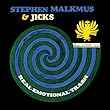 9. Real Emotional Trash by Stephen Malkmus and the Jicks - Malkmus seems to be comfortably settling into some kind of indie jam band mode. I'm not typically one for jam bands, but his songwriting is top-notch and I have to admit that I prefer this to Malkmus' former band, Pavement.
 8. Smile by Boris - Boris continues to be the best current metal band out there, and the psychedelic accents, especially on the tracks with Ghost's guitarist Michio Kurihara, really make this the thinking man's metallic noise. While this album is exceptional, it still doesn't compare to their live barrage of sound. See them if you get the chance.
 7. Preteen Weaponry by Oneida - These in-your-face walls of mostly instrumental sound produces an intensity that no one else quite matched this year. Bury your mind under these sheets of guitar and pounding percussion. It ends up in a sweet spot between post-rock and noise band aesthetics.
 6. High Places by High Places - With plunking production and cute-in-a-good-way female vocals, High Places' debut LP comes across as island music transmitted from Neptune.
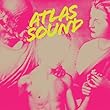 5. Let the Blind Lead Those Who Can See But Cannot Feel by Atlas Sound - Brandon Cox (of Deerhunter) shifted his main band's guitar driven atmospherics into the world of electronics and managed to create what may be the trippiest album that showed up this year.
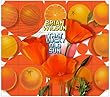 4. That Lucky Old Sun by Brian Wilson - Brian Wilson may never again scale the heights of "Pet Sounds" again, but at age 66 he has managed to make music that matches the Beach Boys' 1965 pop prime, and that's more than good enough. This is the best sunshine pop you'll hear in the 21 century.
 3. Microcastle/Weird Era Cont. by Deerhunter - Deerhunter takes their hazy guitarscapes and blends them well with 60's AM pop sensibilities. It's like being stuck between two amazing radio stations. See them live for an even more mindbending experience.
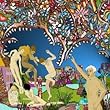 2. Skeletal Lamping by Of Montreal - Kevin Barnes' stumbles into uncharted territory as he melds his trademark psych-pop and electro-pop with his deranged alter-ego of a middle aged, transsexual, black funk singer. The disturbing thing is it works really well. The music changes often and drifts through about every possible pop genre, so hold on tight.
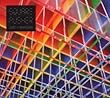 1. Just a Souvenir by Squarepusher - These are the electronic results of a wild and trippy dream about a surreal 'ultragig.' The results do not disappoint, nor do Squarepusher's phenomenal string bass skills. How could you go wrong when your concept revolves around a giant, glowing coathanger?
This are new releases, so I will not be treating you to the full albums, but you're more than welcome to the following sampling:
Track Listing:
1. The Release Will Come Soon - Glaze of Cathexis (3:02)
2. An Eluardian Instance - Of Montreal (4:35)
3. Vision's the First - High Places (3:37)
4. Operation - Deerhunter (4:04)
5. Antillas - El Guincho (5:28)
6. Planet Gear - Squarepusher (4:02)
7. Gardenia - Stephen Malkmus and the Jicks (2:53)
8. Live Let Live/That Lucky Old Sun (reprise) - Brian Wilson (2:34)
9. Paradise Drone - Damaged Tape (4:19)
10. Cold as Ice - Atlas Sound (3:33)
11. Flower Sun Rain - Boris (5:35)
12. Preteen Weaponry Part 2 - Oneida (11:26)
Total Time: (55:08)
97.3 MB
Listen To Me:
Dr. Schluss' Best of 2008
30 November 2008
Dr. Schluss' Psychedelic Pop Explosion!!!
 Howdy, folks! I'm not really a big compilation guy on this blog, but I wanted to get together a primer that might help folks become more familiar with the stuff they'll find here. Of course, I've been doing this blog for almost two years and I quickly realized that I couldn't really get an accurate statistical analysis of the entire thing. Thus, I invite you to unleash the more psychedelically poppy sorts of sounds upon your ear. Well, by poppy I guess I mean catchy tracks that generally fit into a pop music structure, but the sounds are certainly demented. Most of the tracks you'll find here are straight from the prime late 60's era of psychedelic weirdness. I've tried to avoid the folks that you've heard on the Nuggets' compilations, although I can't vouch about Pebbles (never really listened to those much). Anyway, give these tracks a listen and then fearlessly plunge into the Psychedelic Garage archives if you dare.
Track Listing:
1. Sweet December - The David (3:07)
2. (We Are) Dream Vendors - The Merchants of Dream (3:42)
3. Psyche Rock - Pierre Henry & Michel Colombier (2:38)
4. Jolly Mary - July (2:20)
5. Cancer (The Moon Child) - The Zodiac (3:29)
6. Whole Earth Rhythm - Saddhu Brand (3:22)
7. Wild Bill Hickock Rides Again - The Open Window (2:50)
8. Quem Twm Medo de Brincar de Amor - Os Mutantes (3:44)
9. 2086 - Bit' A Sweet (3:15)
10. At the Third Stroke - Picadilly Line (3:01)
11. Land of Sensations & Delights - J.K. and Co. (1:46)
12. Walking in the Forest (Of My Mind) - Paul Perrish (2:43)
13. Girl on a Swing - Kevin Ayers (2:49)
14. Cardboard Watch - The End (2:54)
15. Black Sunshine - Kennelmus (2:50)
16. Baby, Let Me Show You Where I Live - Chrysalis (2:35)
17. The Island - The Millennium (3:21)
18. Gas Board Under - Skip Bifferty (2:19)
19. My Sorrow - Chico Magnetic Band (3:07)
20. No - Rainbow Ffolly (2:58)
21. Blue Poppy - Mort Garson & Jacques Wilson (6:51)
22. A Little Star - The Orient Express (2:21)
23. End of the World - Aphrodite's Child (3:19)
Total Time - (1:11:21)
121 MB
Listen to Me:
Dr. Schluss' Psychedelic Pop Explosion!!! (Part One)
Dr. Schluss' Psychedelic Pop Explosion!!! (Part Two)
Los Brujos - 1991 - Fin de Semana Salvaje
 Quality: 3.5 out of 5
Argentinean alternative band Los Brujos got involved in the local scene in 1988. Combining '60s beat sounds and '80s hardcore-metal, Los Brujos was pointed out as an experimental group. In addition, their theatrical performances, where musicians created a special atmosphere around them, made Los Brujos a very special rock act. Daniel Melero produced their first album, called Fin De Semana Salvaje, in 1992; soon, their song "Kanishka" hit the charts. In 1993, San Cipriano was released, followed by 1995's Guerra De Nervios, which had contributions by Gustavo Cerati and Juana La Loca's dummer Aitor Graña. The band announced its breakup in 1998.
Los Brujos somos un grupo de rock que renueva la escena musical de los 90, encabezando el denominado Nuevo Rock Argentino. Nuestro sonido es el beatcore, brindamos unos shows hiper energéticos, y poseemos un vestuario único.
No hay mucho más para decir!!!!!
Enjoy!!!!!!
Babasónicos - 1994 - Trance Zomba
 Quality: 5 ( for an Argentinian rock band!)
Here`s one of my favourite argentinian bands, they made really good stuff till 2000 (in my opinion). Dig it.
Babasónicos' name is based on a tribute to Hindu prophet Baba combined with the name of a popular cartoon from the '70s. Singer Adrián Rodríguez, keyboardist Uma-T, guitarist Mariano Roger Sónico, bassist Gabo, percussionist Diego Uma, and drummer Diego Castellano recorded Pasto in 1992. That album included their hit song called "De-generación." As the popularity of this Latin rock group was growing, chances to play along with major bands came soon. In 1994, Babasónicos was the opening act to INXS, Soul Asylum, and Depeche Mode. That same year, Trance Zomba was released. In August of 1995, Babasónicos participated in an Argentinean festival called Nuevo Rock, having the chance to play along with Peligrosos Gorriones and Los Brujos, consolidating their presence in the local scene.
28 November 2008
Okko Bekker - 1971 - Sitar and Electronics
 Quality: 3.75 out of 5
Trip-O-Meter: 3.75 out of 5
I'll admit that I have no clue who Okko Bekker is beyond the sounds on this album. It's basically one of those lounge-exploitation affairs where the producers use some unconventional instrumentation to hide the fact that the basic charts provide for music that would be perfect at a 1957 corporate martini party. Mr. Bekker chose to use sitar, and electronics (duh), and tabla, and fuzzed-out guitars (ooh!). All of these things hit my soft spot, so I'm pretty entertained by this album.
Most of the tracks are funky, Bollywood-ready instrumentals that portend to create some kind of Indian imagery. I don't know; I doubt the "Ganges Delta" comes across nearly as 'groovy-like' as it does here, but between the sitar and freaky synth lead, I don't care. There's a psychedelic lounge cover of the Beatles "If I Needed Someone," which is pretty fun, and a barely recognizable rendition of "A Day in the Life." "Himalaya Highway" sounds ready for play in your more confused local Indian restaurant, and "Shiva's Lullabye" is a far finer way to make a chill lounge track than by using 101 strings. "Painted Sails on Ganges" actually manages to be an extended track in a genre where songs tend to stay short, and it's a perfect track for the low-rent, basement psychedelic shack. "Santana" doesn't really sound like that band apart from some percussive similarities, but it does mix sitar and synth on the melody line in a truly odd way.
I can't say that this is any sort of classic, although it's definitely a few cuts above the typical psychedelic exploitation. I can say that it's wildly entertaining for myself, and you may find yourself a fan of its grooviness too. Let me say it one more time: groovy.
Popol Vuh - 1974 - Einsjager & Seibenjager
 Quality: 3.5 out of 5
Trip-O-Meter: 3.5 out of 5
That title deserves a couple of umlauts, but I'm not quite smart enough to know how to get them in there. Anyway, the more important matter at hand is obviously this album, which is quite good, but very disappointing for those that drool over the band early interstellar sounds. At this point, Popol Vuh becomes a much more conventional rock band. Yes, they play well. Yes, new guitarist Daniel Fichelscher contributes some great space rock guitar parts. But I'll be damned if this doesn't sound like a band that would perform at a jam band tribute to Pink Floyd or something.
"Kleiner Kleiner" is a watered-down, but still potent suggestion of the band's mysterious tones, but "King Minos" is a better example of Popol Vuh's new M.O. There are touches of prog and the typical seventies rockin' sound that seem like an unfortunate retreat from the frontier that Fricke explored on albums past. Once you've explored the outer realms of sound, it's sort of a killjoy to return. The first side of the album does present a consistently high quality, and there are plenty of nice folk and space rock moments, but it comes across almost as generic for me. The side long title track seems like it could be a return to exploration, but it's really just several jam band-like sounds strewn about a 20 minute period with a couple of more ambient segues.
I've been throwing around the jam band term a lot here. There is far more of a sense of purpose and inspired instrumental command than you're likely to hear on a Phish or Widespread Panic disc, but this album still makes me think of those band while their earlier stuff (and most of the music I review on this site) does not. This isn't bad stuff, it just feels like serious underachieving from what should be a great band.
Buy Me:
Popol Vuh - 1974 - Einsjager & Seibenjager
Popol Vuh - 1972 - Hosianna Mantra
 Quality: 4 out of 5
Trip-O-Meter: 3.75 out of 5
Now, I suppose that it may make me a little grinchy, but I really don't like 99% of the Christmas music that I come across. I usually find the melodies far too predictable and the typically 'warm' instrumentation annoying. Florian Fricke was not out to make Christmas music with the third Popol Vuh LP, Hosianna Mantra, but some of those Christmas characteristics do rear their ugly heads in the music presented here. Apparently, Fricke had decided to become a more hardcore follower of the Christian faith, and the concepts here very much reflect that. That's not really a problem (although it tends to be a bad omen, the prime example being Dylan's 'Christian' albums), but somehow his new-found faith also convinced him to chuck the Moog and focus primarily on more organic sounds. Here it manages to work pretty well, but as the 70's rolled on, I don't think Popol Vuh's music quite managed to create the otherworldly vibes the the first two albums (and the first side of this one) did. Basically we're looking at a pretty good transitional album with Hosianna Mantra; I just don't really like where the transition was going.
Side one is the keeper here, and best refelects what Julian Cope referred to as psychedelic music for a convalescent home. Fricke seems to be eternally rolling around on his piano on the Hosianna Mantra suite, and he's accompanied by plenty of horns, treated pianos, and other such accouterments. The big standouts, though, are the liquid, delayed guitars of Conny Veit, and the soaring vocals of Djong Yun which commence on the second track. The first side is a pretty major departure from the Popol Vuh sound that we heard on the earlier albums, but it is just as effective in creating a distinct sound world. I'm not so hep towards the second side. "Das V Buch Mose," which is arranged as a side-long suite, falls to what I feel is the Christmas music curse. Right at the start we get a flute part that sounds like it was ripped straight off of a Windham Hill Christmas sampler. Sure there's a sitar in the background for added effect, but that doesn't sate the odd feeling in my stomach. The short "Andacht" sections are pretty cool, but "Segung" provides Yun with a vocal line containing too much syrup (granted the instrumental here works relatively well), and "Nicht Hoch" comes across as a slightly psychedelicized "Silent Night."
There is a lot here worth your attention. For those of you with a ear for warm holiday sounds, you might even rate this as your favorite Popol Vuh album. But some of us psychonauts out there may wish that Fricke had not ejected the electronics and focused more on the otherworldly melodies that cropped up on the first two albums and even the title suite of this one.
Buy Me:
Popol Vuh - 1972 Hosianna Mantra
Subscribe to:
Posts (Atom)