21 April 2010

Mike Mainieri - 1968 - Journey Thru an Electric Tube

Quality: 4.25 out of 5
Trip-O-Meter: 4.25 out of 5

If you're a regular reader of this blog, you're probably aware that I'm a sucker for sitars. I don't think I've quite let readers on to my obsession with the sounds of the vibraphone (I've got a shrine to Roy Ayers in the closet of my mind), but we've got a fine album here to scratch that itch. Mike Mainieri may not be on the A-list of jazz vibraphonists, but he definitely manages to work out some great grooves on this LP. Helping out immensely is flautist Jeremy Steig. His contributions should erase that image of Will Ferrell rocking the jazz flute in Anchorman. This will be in regular rotation on the sound system when I open my chain of opium dens.

On Journey Thru an Electric Tube, we've got several groovers and ballads. All of the groovers are top notch - "It's All Becoming So Clear Now" and "We'll Speak Above the Roar" glide through time and space quite well, with the rhythm section providing a nice platform for Mainieri, Steig, and some fuzz guitar to train off from. "The Bush" makes me thing of early Allman Brothers if you're up for that sort of thing. I'm not quite as hep to the ballads here, but they are perfectly listenable. "I'll Sing You Softly of My Life" fares the best of those tune. But for all of you psychonauts out there, we have the extended "Allow Your Mind to Wander" for your discerning ear. This track has some wild improvisation, strange echoing effects, and is firmly planted in the more avant guard realm of existence. You'll be best of following the instruction of the track's title.

Once you've played out your Cosmic Brotherhood from Bill Plummer, this is a nice destination for your fix of psychedelic jazz. Several of the tracks here have the ability to launch your mind straight through a psychedelic basement club at 3am (well, that's where the electric tube took me), and the rest are perfectly listenable affairs.

20 April 2010

Colours - 1968 - Colours

Quality: 4 out of 5
Trip-O-Meter: 3.75 out of 5

Here's a distinctly American take on the more psychedelic, orchestral sounds that the Beatles were known for. The project was initiated by songwriters Jack Dalton and Gary Montgomery and features fine session players that also played with A-listers like Derek and the Dominos and Taj Mahal. Besides the obvious Beatles influence, the music here is crossbred with the sounds you'd find with Three Dog Night or hippy musicals like Hair, but this one immediately scores an extra Twinkie on the totem pole of psychedelic sounds as I much prefer this to Hair or Three Dog Night. The production is meaty and top notch, and the vocals are of high quality, both with the singer's Lennon-on-quaaludes sound and the Brian Wilson-worthy back ground harmonies. My only major critique with this one is that a fair portion of the lyrics sound like they were written by a 12-year-old ("Smoke a while, think a while - I feel I'm getting mighty bored - I know what I can do - I think I'll rob a liquor store..." FAIL!!), while the rest don't make much of an impressison. Fortunately, the music half of the songwriting more than makes up for this problem with some top notch psychedelic/sunshine pop melodies.

It's hard to pick out the choice tracks here as the album almost plays like a 'best of' collection, which serves to illuminate the quality of the songs. I could live without the music hall/vaudeville schtick of "Don't You Realize," but I have a bias against that sort of thing on rock albums and it's not as bad as the typical late 60's journey into that territory. My favorite tracks are stuck in the middle of the album, although everything here is pretty good. "I'm Leaving" benefits from a groovy beat and a fine fuzzy guitar solo, while "Brother Lou's Love Colony" brings out the sitars and has what I believe is the most memorable. "Love Heal" veer the closest towards Hair territory with it's call-and-response chorus, but the perfect Magical Mystery Tour emulation (the drums and bass are spot on) makes it awesome. "Where Is She" and "Rather Be Me" start off with pretty lame intros, but stick with them for 10 seconds and you'll find some very groovy tunes.

If you frequent the Psychedelic Garage for psychedelic pop, then this album is what you're looking for. No, it's not perfect, but I would say that the flaws here are more endearing than annoying. Yes, they probably borrow a bit too much from the Beatles, but they do it well enough that it's not a problem. At least this makes for a better faux-Beatles album than those of Klaatu or ELO.

Buy Me (this includes a bunch of bonus tracks and their second album):
Colours - 1968 - Colours

13 April 2010

Brad Smith - 2010 - Moon8

Quality: 3.75 out of 5
Trip-O-Meter: 4.25 out of 5

I have to confess that I really don't like Dark Side of the Moon very much. Maybe I've just heard it too much. I tend to stick to left of the dial stations on my radio, but I feel like whenever I venture into the higher frequencies, I end up hearing "Money." Yet I can't deny that there is some fine artistry behind the Floyd's efforts, and fortunately the last couple years have seen a strange cottage industry of folks covering the entire album. I dug the Flaming Lips faux-krautrock take on the album last year, and I'm a fan of the reggae version that the Easy Star All-Stars cranked out. Here's another one that's gotten my attention. Brad Smith is a video game programmer and musician out of Canada who has managed to make an 8-bit rendition of the music. For those of you who are not retro gaming geeks, these are the sounds that populated Nintendo's FamiCom system back in the 80's, so all of the sounds have to be programmed to fit on a chip set on a game cartridge. I'd say that the man has done his job quite well.

Now, I'm not one to listen to retro game music outside of a game. 8-bit tones can wear on your ears pretty quickly, and they don't make you feel very cool while gliding down the highway. That said, Mr. Smith has managed to stuff in most of the arranging quirks and harmonic tones of the original album using a very small set of musical resources. I think it's fun to hear the saxophones, soul singer, and Roger Waters reduced to simple square waves. Of course with the self-imposed limitations, this is all instrumental.

While this may not be the best album as seen out of context, I would proclaim it the best retro video game soundtrack ever were it actually in a video game. Still, I think that there is something a little more than just novelty value behind Moon8. This is a fine place to try and hear the ghost in the machine. I'd suggest giving this one a listen while running your emulation (or Famicom if you've still got one) of something like Metroid or the first few Final Fantasy games. That would make this one sound like an utter classic.

Note: The files for this are only listed as "Side One" and "Side Two." This is the artist's preference. Head here to take a look at Brad's website:
Moon8 Website

Listen to Me:
Brad Smith - 2010 - Moon8

08 April 2010

Drum Circus - 1971 - Magic Circus

Quality: 4 out of 5
Trip-O-Meter: 4.5 out of 5

Something pretty strange must have been seeping into the Germanic water supply in the early 1970's. This uber-freakout involves Swiss drummer Peter Giger, some folks from Brainticket including Joel Vandroogenbroeck playing flute and sitar, and apparently Timothy Leary sending some of the lyrics their way. The sound here is definitely follows a firm trajectory through the outer reaches of the krautrock universe, but there's also a notable jazz influence that sets this one apart.

The main event here is the twenty-four minute long track, "Magic Circus." This tune offers several distinct sections, with percussive walls of sound, clouds of flute, sitars, modal jazz passages, spoken word, and odd chants. The chanting in particular makes me start thinking about the Firesign Theatre or the Monkees' oddball chant from their film Head. It's a first rate musical trip and chances are that even if you don't dig all of it, some of it will get your attention. Side two brings us some shorter form pieces, with "Papera," "Groove Rock," and "All Things Pass" putting on a convincing jazz and/or funk hat on pretty convincingly, and "Now It Hurts" and "La-Si-Do" recalling the lysergic sounds of Brainticket.

If there's nothing else you can say about this album, it's pretty diverse. But I can say a lot more in favor of it and I'd be willing to toss it at least in the "underrated minor classic" category. Drum Circus is very ambitious in terms of their sonic targets, and I think you'll find that they mostly hit the mark. I just wish that someone had made some groovy psychedelic artwork for the cover instead of the 'I just learned Photoshop yesterday' look (I'm assuming this art is for a more modern release).

31 March 2010

Steve Hillage - 1979 - Rainbow Dome Musick

Quality: 5 out of 5
Trip-O-Meter: 5 out of 5


I originally picked up this album with no knowledge of Steve Hillage or Gong. The cover art simply grabbed my attention, as did the title. Rainbow Dome Musick sounds like a psychedelic planetarium to me, which is very appealing to my sensibilities. Fortunately, that description fits the actual music quite well. While Steve Hillage's space rock albums may have had some clues towards this sound, Rainbow Dome Musick is worlds away from those earlier albums. This is an ambient chill out album, with sliding sequencers, watery noises, and glissando gliding guitars. 1979 may seem earlier for an ambient chill out album, but Alex Patterson of the Orb famously DJed his late 80's chill out room using this, and once it caught Hillage's attention, the guitarist ended up both working with the Orb and founding the fine electronic group System 7. It's not a stretch to say that this album is ground zero for an entire genre.

This is music that must be experienced - you will not find yourself humming it as you go down the street. As such, we are presented with two side long tracks. With Tibetian bells, spacey sequencers, Hillage's restrained guitar playing, and the sounds of flowing water, it's difficult to focus on these sounds. But that's the point. If these album clicks with you, it will likely shirft your brain into a more zen state. All I can say specifically is that I'm always disappointed hearing the ting-sha at the beginning of "Four Ever Rainbow" as that lets me know that the album is now half way over.

Those that read this blog regularly are probably aware that I have a soft spot for trance inducing records, and this is one of the best ones to come from a rock background (not that you'll find anything resembling rock here). I would go as far to say that this is one of the albums that got me motivated to start writing this blog. Why it took me three years to actually write about it is beyond me (probably laziness).

Note: The vinyl pressing of this is on clear vinyl. It looks awesome and fits the sounds found in its grooves.

Buy Me:
Steve Hillage - 1979 - Rainbow Dome Musick

30 March 2010

Steve Hillage - 1979 - Live Herald

Quality: 4 out of 5
Trip-O-Meter: 4 out of 5

First off, I'm taking a look at the CD-era version of this album, which is completely live. The original issue of the album boasted a side of studio tracks, which have now been ported over to the Open album. Anyway, this is one of those live albums that sort of double as a greatest hits collection. Your favorite track from Hillage's first four albums may very well not appear here, but what's here are still fine tracks. The performances definitely benefit from Hillage's road worn band, and Giraudy's electronics add a nice new dimension to the tracks from the first few albums. The cover of Donovan's "Hurdy Gurdy Man" is even better here and the "Lunar Music Suite" contains an energetic tear through the always welcome "Om" riff.

The sound quality on this disc is not quite as clear as I'd like, but it is a live album and it is certainly listenable. This is not to rip on the remastering; the Hillage reissues are one of the better sets of reissues I've come across.

When you get right down to it, this isn't a bad place to start if you're unfamiliar with Hillage. Those who are already fans will find a lot to love here as well. As with Green or L, this is about as good as British space rock gets (I have to give the Germans the win in the end).

Buy Me:
Steve Hillage - 1979 - Live Herald

Steve Hillage - 1978 - Green

Quality: 4.25 out of 5
Trip-O-Meter: 4.5 out of 5

Golly! I started with these Steve Hillage reviews more than two years ago and never really got back to them. Well, here's Green to continue the tale. As you may or may not be aware, Steve Hillage was one of the more notable guitarists to spend time with the freaky psych-prog band Gong and I would count him (along with Manuel Gottsching probably) as the premier space rock guitarist of the 70's. This album includes some extra space rock royalty as Nick Mason of Pink Floyd served as this album's producer. His presence and the 1978 date on this album do push the sound into the territory of Animals or Wish You Were Here. Hillage's endearing new age Jesus vibe helps to distinguish the affair, and with top rate instrumentalists backing him up (especially his 'life partner' Miquette Giraudy handling the electronics), I'll go ahead and say that I prefer this to the sounds of 70's Floyd.

The songs on Green don't really slap you with an aura of instant awesomeness, but they definitely grow on you. A few songs like "Sea Nature" and "Unidentified (Flying Being)" have an entertaining slight funk edge. The P-funk style bass in the latter probably takes it a step further. "Ether Ships" and "Leylines to Glassdom" focus on the tranced out electronics and guitars that Hillage and Giraudy would focus on more and more over the years (the two are still active and producing fine electronic albums under the monkier System 7). "Crystal Ships" shares an affinity with the music that Bowie and Eno were releasing around this same time period. The proper album closes with "The Glorious Om Riff," which was originally recorded as "Maser Builder" on Gong's You. I'm hesitant to say this one is better, especially with the bias of considering You as one of my favorite albums, but I will say that this track is at least as good as the original.

The reissue of Green also features four bonus tracks. Three of these are contemporaneous live tracks (the studio version of "Not Fade Away" is on Motivation Radio). Hillage has a fine live album with Live Herald, but you can make a pretty fine live set by compiling the tracks from these reissues. There's also an alternate mix of "Meditation of the Snake," which is a little odd since that track is from Fish Rising, but whatever.

This doesn't bug me too much, but it's probably worth noting that Hillage doesn't have much of a singing voice. Space rock bands don't seem to put a lot of stock into vocals (Gong's Daevid Allen doesn't have much of a voice either), and I would describe Hillage's golden throat as a slightly more unhinged Roger Waters. Perhaps Hillage figured this out, and that's why he doesn't sing on the System 7 recordings.

My first impression of this was not the best, but after some time I feel that this is a competitor with L for the title of Hillage's best rock album. It's got a bit of a sci-fi nuance to the sound which always gets my attention. This is also the happy point where Hillage's album artwork switches from 'embarassing' to 'awesome.' Green should go straight to the top of your space rock heap.

Buy Me:
Steve Hillage - 1978 - Green

25 March 2010

Roger Manning Jr. and Brian Reitzell - 2000 - Logan's Sanctuary

Quality: 4 out of 5
Trip-O-Meter: 4.25 out of 5

This album is the soundtrack for an imaginary sequel to the 70's campy sci-fi opus Logan's Run. Now, I'll go straight on record and say that Logan's Run belongs on the short list of my favorite movies. It's a masterpiece of cheezeball 70's futurist designs and Jerry Goldsmith's score remains one of the best electronic soundtracks even today (it's of course dated, but in a rarefied way). Roger Manning Jr., a major musical force in the early 90's pop-psych band Jellyfish and the relentlessly amusing Moog Cookbook would likely agree with this, and Logan's Sanctuary is a haven for goofy analog electronic sounds. It's worth noting that Manning does not try to recreate Goldsmith's sounds. In our hypothetical world, Logan's Sanctuary would have been the ultra low budget sequel with a significant downgrade in production values and the soundtrack budget. Fortunately, if the idea of a Logan's Run sequel (at least musically) is even slightly appealing to you, then the goofier sounds of this disc will not bother you. You'll of course note the name Brian Reitzell from the artist credits. I have to admit that I know little about him other than he was a drummer for the underground band Redd Kross. The drumming here, when present, is pretty groovy, so kudos to you too Mr. Reitzell.

I'm don't really feel like there is a standout or highlight track lurking about here, but almost everything is pretty high quality and certainly listenable. "Islands in the Sky" would open up our low budget, sci-fi potboiler, and it would be a perfect match if this movie actually existed. "Lara's Rainbow" recalls the band Air in one of their darker moments (I think both of these guys have done business with Air), while "Pleasure Dome 12 is sort of like Kraftwerk with orgasms. We also have "Escape," which comes across like an 8-bit ripoff of "Time" from Dark Side of the Moon. My favorite, though, is the widescreen, technicolor, electronic polyester suit sound of "Metropia." It packs the most instantly memorable melody of the album as well.While by no means bad, the sleaze pop of "Search for Tomorrow" doesn't quite hit the mark for me. But all 70's genre films need a vocal track of this sort, so at least Manning and Reitzell made the attempt. "The Silver Garden" throws in a little faux orchestration at the end that I probably could have lived without.

If you dig Logan's Run, Air, and/or something like the Moog Cookbook, you'll find plenty to enjoy here. It's a trip through the sleazy dives of a dystopian future that at least I find infinitely entertaining. It will make you wish that this movie actually existed, but that's probably not realistic. I know that Hollywood has been entertaining the idea of a Logan's Run remake, but like the Willy Wonka remake, they'd probably miss out on the groovy tone of the original for some lame CGI and 'authenticity' to the original source material (well, a movie hewing closer to the original novel of Logan's Run wouldn't necessarily be a bad thing, but I can't imagine that it would have the same insane charm).

Just to rant off subject a little bit, this album was released by the unfortunately now defunct Emperor Norton Records. This is one of the few labels (along with Impulse!, Blue Thumb, and Kompact) that drove me to buy anything I could find on the label. I guess you have to be a genre label in order to do that, and Emperor Norton specialized in freaky retro-electronica. Their biggest moment in the sun was probably the Lost in Translation soundtrack - another fine disc to track down.

15 March 2010

Conrad Schnitzler - 1981 - Conal

Quality: 4 out of 5
Trip-O-Meter: 4.75 out of 5

Conrad Schnitzler deserves a place among the krautrock royalty due to his early 70's work with major German groups like Kraftwerk and Kluster. By the early 80's timeframe of this album, Schnitzler was drifting deeper into the electronic ocean. He wasn't messing with the polysynths of that era as Conal seems to be the mostly (if not completely) the result of experimentation with a modular synthesizer. In fact, this would make a good alternate to the Logan's Run soundtrack as you're gliding through your peoplemover pod in the City of the Domes. This is very much in the line of something Morton Subotnick would've churned out in the late 60's. A positive contrast with some of the other 'bleepity-bloop' proto-electronica is the presence of some buzzing drones to ground the more liquid electronic sounds.

I suppose the idea here is to take the entire thing as a single, 40 minute piece, although we do get the divide in the middle to fit into the vinyl time contraits. With no traditional instruments present (and very little keyboard interface for the electronics), this is solid, otherworldly weirdness. There's not much diversity here, but if you gen zen you'll find plenty of varying textures. Fans of enjoyable primitive electronic music will find plenty to love here.

Warning - 1983 - Electric Eyes

Quality: 3.5 out of 5
Trip-O-Meter: 4 out of 5

Here's an album that will give you nightmares. It's a distinctly early 80's synth pop affair, so it doesn't really fit into our regular 'psychedelic' heading, but it will certainly twirl a few of your brain cells. I've never been to a German bondage club, but I would expect that this album would make a fine soundtrack for that setting. Along with the icy-yet-still-very-analog synths, we get a vocalist who sounds like he really wanted to be in a death metal band, but was kicked out for sounding too much like a satanic Cookie Monster. There's also an occasional disturbing female vocalist chiming in.

The first two tracks on here pretty much give you a feel for the best of the album. "White Camels" is certainly a fun one with an introduction to our demented Cookie Monster vocalist, especially when the song's chorus attempts to brighten up the tone a bit but with no change in the growling vocals. "Dark Crystal" pummels the beat along nicely too and we get a taste of the really creepy female vocals. She comes out sounding sort of like Charlotte Gainsbourg in "Lemon Incest," which is a whole new can of worms in and of itself (the video of that song show pre-teen Charlotte in bed with her daddy Serge). "Journey to the Other Side" and "Night Crossing" start off with cool dark ambient sections in their first halves before devolving into crappy Euro-pop tracks.

Yeah, when all is said and done, this is a pretty disturbing album. It earns points for some sterling synth pop, proto-industrial sounds, and scary Cookie Monster vocals, but I don't think I'd really get caught listening to it too much. I'd call it a guilty pleasure, but it's too freakish for me to apply the word 'pleasure.' Delve in if you dare.

As a side note, this is the second album by Warning. The first one is supposedly just as insane, but features some large slabs of distorted guitar that are mostly absent on Electric Eyes.

28 February 2010

Mark Fry - 1972 - Dreaming With Alice

Quality: 4 out of 5
Trip-O-Meter: 4 out of 5

Mark Fry seems to have been a man slightly unstuck in time. He cooked up one of the better acid folk, Donovan-influenced LPs of 1968. Unfortunately. this album came out in 1972. I'm sure that at the time in seemed like Fry was guilty of a anachronistic sin to the general home listener who had Tarkus blasting on the hi-fi. But with all of these decades now in the distant path, we can focus simply on the fact that this is a very groovy album. The Donovan comparison is certainly apt - one version of this album boasted a straight rip of the Barabajagal as cover art. Nevertheless, Mark Fry stakes his own ground with a darker, more tranced-out folk sound. There are actually plenty of moments where Fry matches or even surpasses the sounds of the Scottish bard.

"The Witch" comes out of the gate, instantly pegging this as an album to pay attention to. It does a fine job of evoking a creepy, misty forest at dusk, with the sound of pagan drums primitively pounding away somewhere in the background. "Song For Wilde" is a nice, compact bit of acid folk, while "Roses for Columbus" comes across almost like a Pink Floyd demo for More. "Mandolin Man" actually manages to work itself into a full-fledged psychedelic rave-up before settling into a groove for the coda. The title track is pretty fine, but it is annoyingly chopped up into pieces and used as segues between the longer tracks. I also imagine that Fry must have been hard up for one more track as the closer is just an earlier track backwards.

This is one album where the production, or lack of, really works well to create an atmosphere. Many of the songs here don't seem very far past demo-quality, but they are still slathered with warm, fuzzy reverb to give things a hazy sound.

Hey, a lot of the indie kids are going for this sound here in 2010, an Mark Fry nails the freak folk aesthetic pretty much on the head. Feel free to cross-reference these sounds with those of Donovan and/or the Incredible String Band - they hold up pretty well. The only shame here is that Mark Fry didn't manage to continue on and record more music.

23 February 2010

The Music Asylum - 1970 - Commit Thyself

Quality: 3.5 out of 5
Trip-O-Meter: 3.75 out of 5

What we have here is an album that nicely straddles the crossroads between psychedelic rock, jazz and prog rock. Many of the longtime readers here may know that I'm pretty skeptical of the general 'prog' vibe, and the wankier side of that genre does rear its head here. If you are a prog head, you will likely enjoy this more than I do. Still, there are several stand-out tracks hanging out on this album, and it's a reasonable diverse sounding affair.

You'll basically find three kinds of tracks here: the lengthy, prog-influenced epics; some shorter single-ready tracks; and several oddball, brief instrumental throw-aways. I'm most attracted the the poppier stuff on this one. "Star Dreams (Nebulous)" is a fine piece of sunshine pop, of course featuring harmony vocals along with some nice West Coast style guitar and bass parts that occasionally veer into Frank Zappa territory. Near the end of the album we find "Million Dollar Bash," which channels in a touch of freakish garage rock into the fold. The long form tracks don't completely hold my attention, but those with an affinity for the jazzier side of prog will dig them. I would tag "In My World" as the best of that bunch as it sort of resembles a sunshine pop prog epic, if that makes any sense.

I don't think I'm quite in the key target group for the Music Asylum. There is a good amount of quality music present here (the short and annoying "Tube Along With Me" excepting), with crisp and clean production helping out considerably. I would have liked for them to explore the sunshine pop vibe a little more, but I'm sure plenty of you out there will find much to appreciate with the proggier approach. As much as I hate to say it, there are more than a few moments here that make me think of the "Jazz Oddysey" from the Spinal Tap movie when they're playing at the zoo in the wake of their lead guitarist quitting.

13 February 2010

Condello - 1968 - Phase One

Quality: 3.75 out of 5
Trip-O-Meter: 3.75 out of 5

Ah, Condello (be you the vocalist/guitarist Mike Condello or the Arizona band in general). Why start your album with an out-of-tune clunker of a track when there are plenty of fine sounds to hear? Oh, well. There's a healthy dose of contemporaneous San Francisco rock lurking about here, especially with Grateful Dead-like harmonies (or go with the Band if you can't deal with Deadheads). These psychedelic popsters were definitely cranking the White Album repeatedly as well, as a few of the better tracks come across like something George Harrison would have plopped down on tape during that period. As my opening comment implies, the album sequencing here is a mess, but a bit of trawling will bring out a few gems.

Condello isn't a particularly groundbreaking band, but they manage some pretty groovy facsimilies and change up their influences just enough to keep it from being a rip off. Still, I think I've got their number for what they were reaching for. Of the better tracks, "Oh, No" and "Dr. Tarr Professor Feather" tend to resemble the aforementioned Harrison tracks, complete with warbling guitars and vocals phased into eternity. "Charming Sitter" and "See What Tomorrow Brings" straddles the fence between the psychedelic Byrds and the country-rock Byrds nicely. "Keep It Inside" and "He'll Keep Waiting" feature Workingman's Dead sort of harmonies, although this is two years before that Dead album, so score one for Condello. "It Don't Matter" makes me think of something the Small Faces would have done for Ogden's Nut Gone Flake, while "Guess I Better Go" could have passed off pretty easily as something Curt Boettcher would have produced.

I feel like I'm being a little lazy when my reviews include this many direct comparisons to other artsts, but Phase One is truthfully a somewhat derivative affair. Fortunately, the band made up for a lack of originality with a few really great songs. You may not need this entire album, but you will likely find three or four songs that you can't live without.

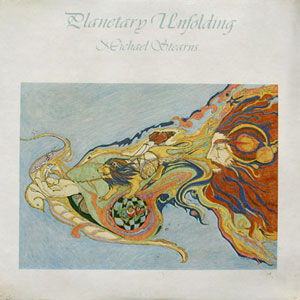
Michael Stearns - 1980 - Planetary Unfolding

Quality: 3.75 out of 5
Trip-O-Meter: 4.25 out of 5

Michael Stearns earned his stripes as an electronic pioneer, although I've always associated his name with the soundtrack to the film "Chronos." This album was made entirely with the Serge synthesizer, a modular beast of a machine whose interface consists of a series of metal pads rather than a keyboard. Stearns uses the washes and bleeps of the synth to try and create the most cosmic sounds possible, although he sometimes teeters a little closer to new age music than I'm comfortable with. Regardless, you're sure to find sounds here to invoke the call of interstellar space.

Typically, I like to give a bit of a track rundown, but there really is not much variation with this album. Every track consists of huge synth pads with little modular flourishes here and there. Your job as the listener is to appreciate the way that the different patterns and tone interact. The only variation of note is that "Something's Moving" start with some percolating sounds similar to fellow synth user Morton Subotnick. I suppose that "Wherever Two or More Are Gathered" picks up a little steam in the early 80's Tangerine Dream sense of the word, too. On a side note, I'm sure that more than one planetarium uses this disc to fill up aural space before the show.

There's plenty to appreciate on Planetary Unfolding, but I wouldn't quite rate it as top shelf material. If you're a synthesizer geek, this is a must hear simply for the not-often-heard Serge. But for those that really want to reprogram their brains through ambient sound, I will first direct to the recordings of Gas or Coil.

31 January 2010

Spacecraft - 1978 - Paradoxe

Quality: 4.25 out of 5
Trip-O-Meter: 4.75 out of 5

I've spent the past few months brainwashing myself with this album on a pretty regular basis. This guitar/synth duo hails from France, but I'd say they're pretty well in cahoots with your krautrock superstars. There's plenty of early Tangerine Dream synthetic iciness and Manuel Gottsching-style guitar insanity lurking in these tracks. They also seem enamoured with the drum machines of the era, which is pretty fun in a retro future way.

This album really slides on through as a single entity of trippiness, but if you break it down, there are basically two kinds of tracks. "Lumiere de Lune" and "Ananda" are distinguished by huge stoic walls of ambient analog synth; I'd say the quietr parts of Tangerine Dream's probably serve as a good reference point. "Pays de Glace," which I understand is a modern day bonus track recorded a few years after the rest of the album, is somehow both more ambient and threatening. Think of Tangerine Dream's Zeit sped up an imbued with the chiming qualities of the Om album you'll find in this blog if you hunt around. The other tracks fall in the category of "Logan's Run-on-crack." Here the primitive drum machines are everpresent and the guitar breaks out of the box. Basically, this is what something like the Moog Cookbook is aiming for, although the novelty value is replaced by sonic schizophrenia.

I'd say this album deserves a fair sight more attention. It compares pretty favorably with something like an early Popol Vuh album, and definitely earned its Trip-O-Meter rating. This is a fine collection to explore the thin rings of Neptune with. It would also work well to subtly scare everyone home if you played this in Tomorrowland around closing time.